
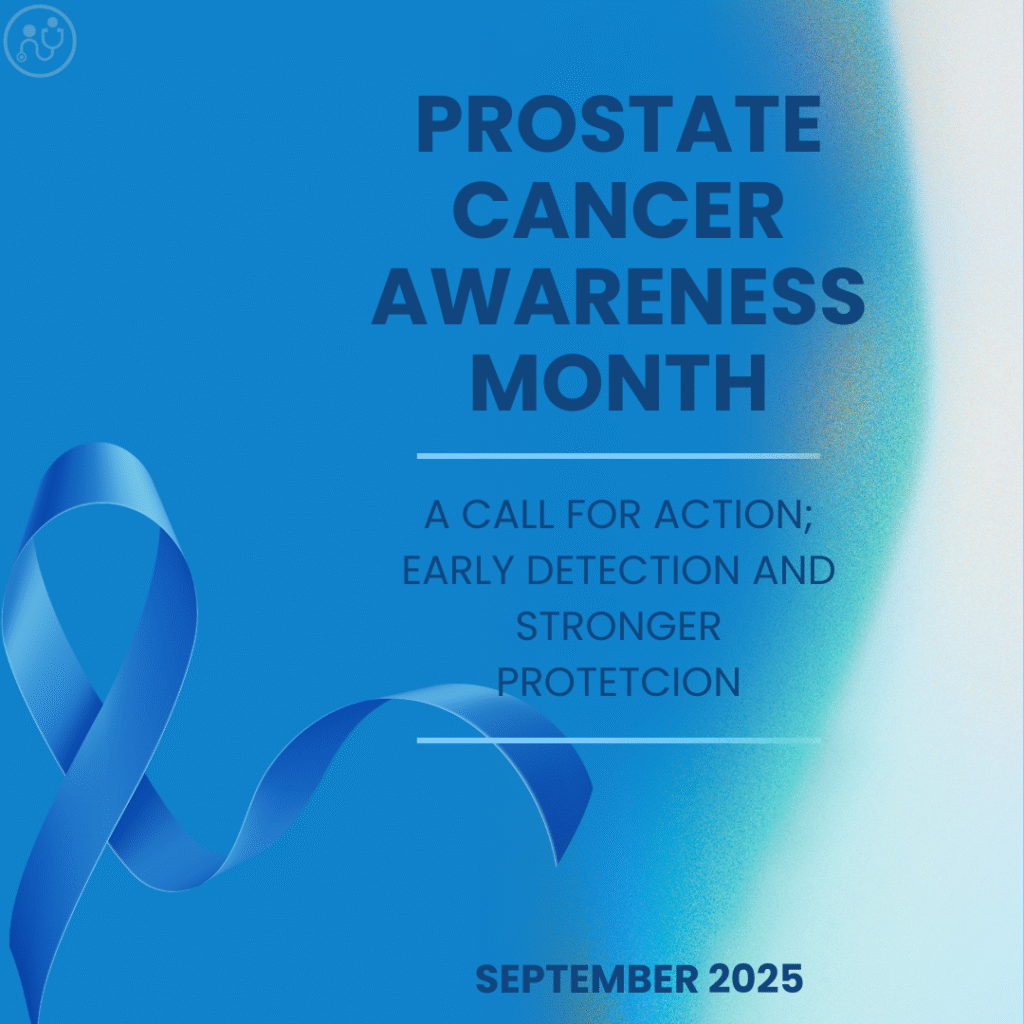
Each September, the spotlight turns to men’s health as we recognize Prostate Cancer Awareness Month. Prostate cancer is one of the most common cancers among men worldwide, yet with early detection and treatment, survival rates are high. This month is dedicated to raising awareness, encouraging regular screenings, and supporting those affected by the disease.
What Is Prostate Cancer?
The prostate is a small gland, about the size of a walnut, located just below the bladder. Its role is to produce fluid that nourishes and transports sperm. Prostate cancer occurs when abnormal cells in this gland grow uncontrollably, sometimes spreading to other areas of the body if not caught early.
Why It Matters
Prostate cancer is the second most common cancer in men, and while it mainly affects men over 50, younger men with certain risk factors can also be at risk. The good news is that when diagnosed early, prostate cancer is highly treatable. However, because it often develops silently, many men don’t realize they have it until it has advanced.
Risk Factors
Several factors can increase a man’s risk of developing prostate cancer:
- Age: Risk rises significantly after 50
- Family history: Having a father, brother, or son with prostate cancer increases risk
- Race: Black men are at higher risk and often face more aggressive forms
- Lifestyle: Diets high in red meat and low in fruits/vegetables may contribute
Common Symptoms
In its early stages, prostate cancer may not cause noticeable symptoms. As it progresses, men may experience:
- Difficulty starting or stopping urination
- Weak or interrupted urine flow
- Frequent urination, especially at night
- Pain or burning during urination
- Blood in urine or semen
- Persistent pain in the back, hips, or pelvis
Since these symptoms can overlap with other prostate conditions, such as benign prostatic hyperplasia (BPH), it’s important to seek medical evaluation rather than ignore them.
Prevention and Action
While not all cases can be prevented, healthy lifestyle choices can support prostate health. Eating a balanced diet rich in vegetables, staying active, and avoiding smoking are key steps. Most importantly, men should talk to their doctors about screening, typically through a prostate-specific antigen (PSA) blood test and, in some cases, a digital rectal exam.
Taking Action This Month
Prostate Cancer Awareness Month is about more than wearing blue ribbons, it’s about sparking conversations that can save lives. Encourage the men in your life to prioritize checkups, learn about their risk, and not shy away from discussing prostate health.
Early detection saves lives. This September, let’s stand together to raise awareness, support research, and protect men’s health for the future.