
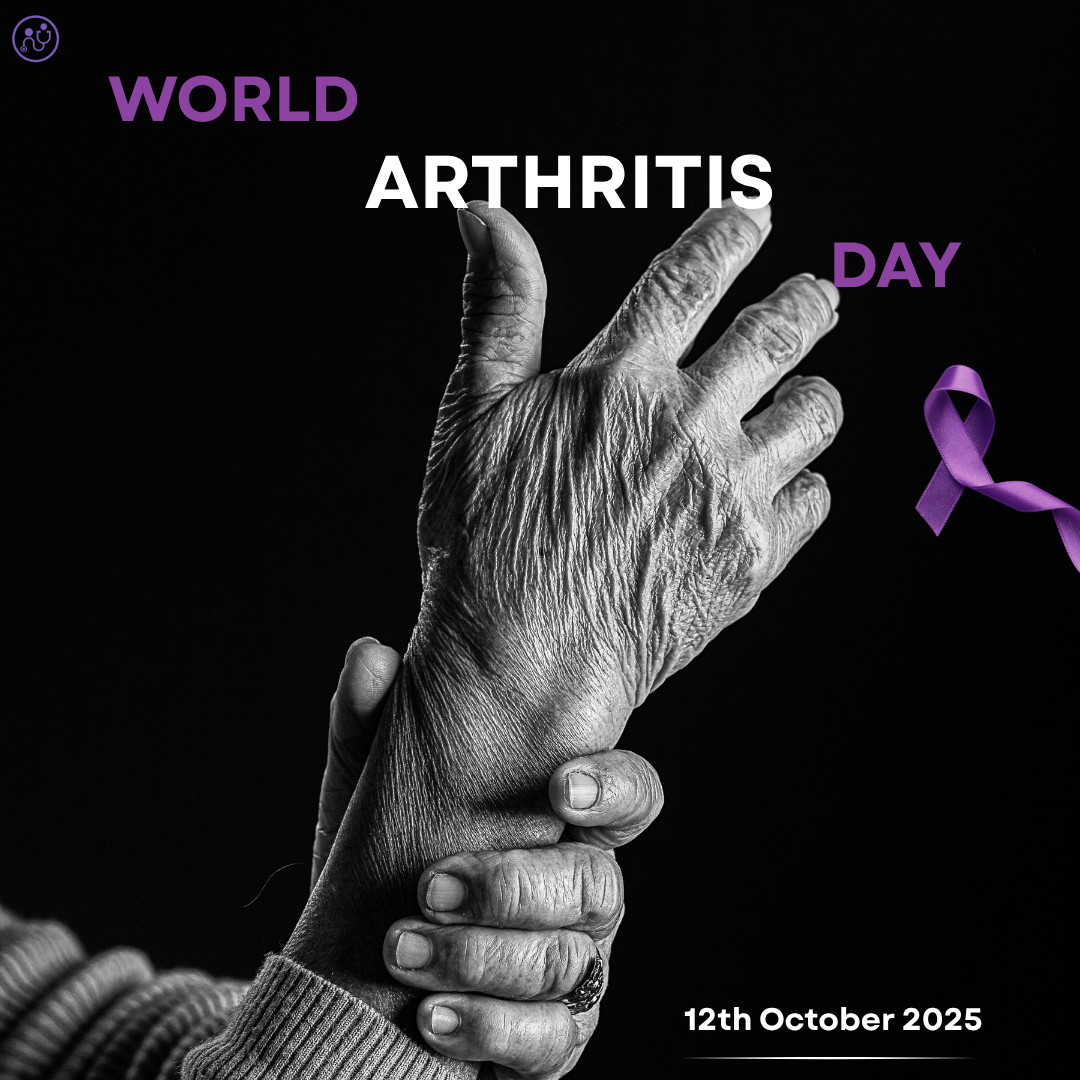
Every year on October 12th, the world observes World Arthritis Day (WAD) — a global campaign aimed at raising awareness about arthritis and other rheumatic and musculoskeletal diseases (RMDs). With millions of people affected worldwide, this day highlights the importance of early diagnosis, effective treatment, and support for those living with arthritis.
What Is Arthritis?
Arthritis is not a single disease but a term that refers to over 100 conditions that affect the joints, tissues around the joint, and other connective tissues. The most common types include osteoarthritis, rheumatoid arthritis, and gout. These conditions cause pain, stiffness, swelling, and reduced mobility, often impacting a person’s ability to perform daily activities.
While arthritis can affect people of all ages, it’s more common among adults over 40 and tends to affect women more often than men.
Why It Matters
According to the World Health Organization (WHO), arthritis and related conditions are among the leading causes of disability worldwide. For many, the pain and fatigue that come with arthritis can affect not only physical health but also mental well-being and quality of life.
World Arthritis Day provides an opportunity to educate communities, dispel myths, and promote early diagnosis. Early detection and the right treatment plan can help manage symptoms, slow disease progression, and improve overall outcomes.
Common Symptoms
Recognizing the signs early is key to managing arthritis effectively. Common symptoms include:
- Persistent joint pain or stiffness
- Swelling or tenderness in joints
- Reduced range of motion
- Fatigue or weakness
- Redness or warmth around affected joints
If you experience these symptoms for more than two weeks, it’s important to consult a healthcare professional.
Risk Factors
Certain factors increase the likelihood of developing arthritis, such as:
- Age – risk increases as you get older
- Family history – genetics can play a role
- Gender – women are more likely to develop most types of arthritis
- Joint injury – past injuries can lead to arthritis later in life
- Obesity – extra weight adds pressure on joints, especially the knees, hips, and spine
Prevention and Management
While arthritis cannot always be prevented, steps can be taken to reduce risk and manage symptoms:
- Maintain a healthy weight
- Stay physically active with low-impact exercises like swimming or walking
- Eat a balanced diet rich in anti-inflammatory foods
- Avoid smoking and excessive alcohol consumption
- Get regular medical checkups and follow treatment plans consistently
This Year’s Message: “Let’s Move Together”
The theme of this year’s World Arthritis Day, “Let’s Move Together,” emphasizes the importance of staying active and supporting one another. Movement is medicine—it strengthens joints, improves mood, and enhances quality of life.
On this World Arthritis Day, let’s move together toward greater understanding, compassion, and support for those living with arthritis. Awareness leads to action—and every step counts.