
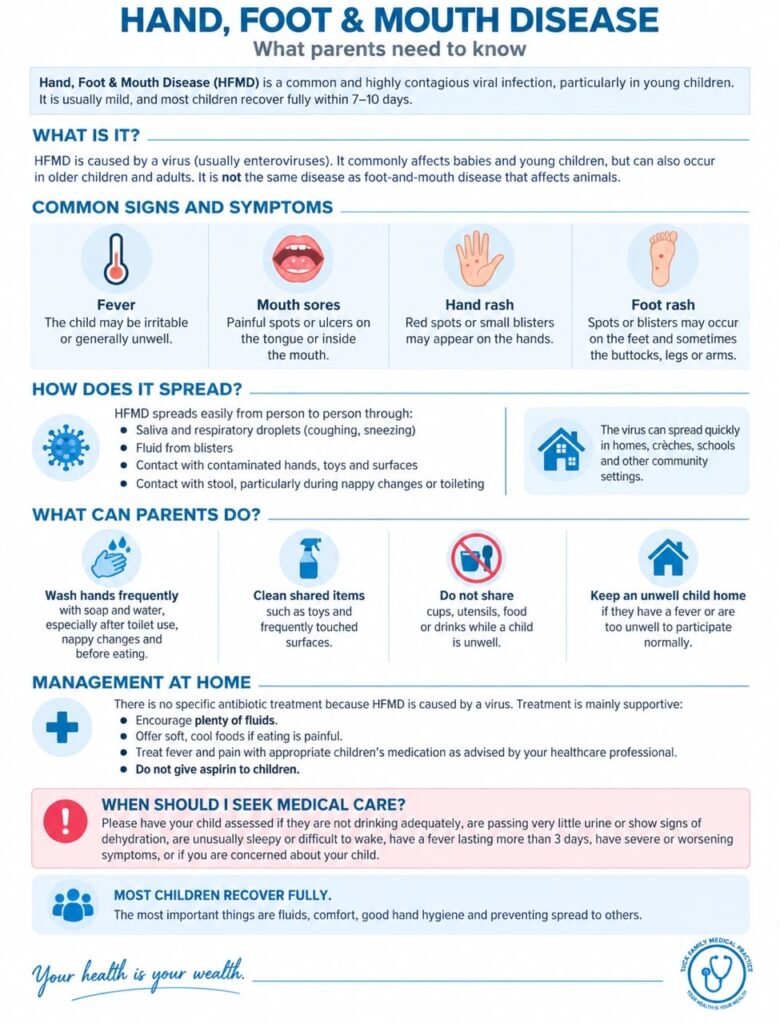
Hand, Foot and Mouth Disease (HFMD) is a common and highly contagious viral infection that primarily affects babies and young children. Although it can be uncomfortable and cause concern for parents, most children recover fully within 7–10 days with appropriate care at home.
Understanding the symptoms, how the infection spreads, and when to seek medical attention can help parents protect their children and prevent the spread within families, schools, and communities.
What Is Hand, Foot and Mouth Disease?
Hand, Foot and Mouth Disease is a viral infection usually caused by enteroviruses. It commonly affects infants and young children, but older children and adults can also become infected.
HFMD is characterised by fever, painful mouth sores, and a skin rash that may develop on the hands and feet. It is important to note that HFMD is not the same as foot-and-mouth disease, which affects animals.
Why It Matters
HFMD spreads easily, particularly in childcare centres, schools, and other settings where children interact closely.
Although most cases are mild, the infection can make children uncomfortable, especially when mouth sores make eating and drinking painful. In some cases, children may become dehydrated if they are unable to drink enough fluids.
Recognising the symptoms early and taking appropriate precautions can help reduce transmission and ensure children receive the care they need.
Common Signs and Symptoms
Symptoms usually develop a few days after infection. They may include:
- Fever: Children may become irritable, tired, or generally unwell.
- Mouth sores: Painful spots or ulcers may develop on the tongue and inside the mouth, making eating and drinking difficult.
- Hand rash: Red spots or small blisters may appear on the palms or fingers.
- Foot rash: Spots or blisters may develop on the soles of the feet and sometimes on the buttocks, legs, or arms.
Not every child will experience all these symptoms, and their severity can vary.
How Does It Spread?
HFMD spreads easily from person to person through:
- Saliva and respiratory droplets produced by coughing or sneezing.
- Fluid from infected blisters.
- Contact with contaminated hands, toys, and frequently touched surfaces.
- Contact with infected stool, particularly during nappy changes or toileting.
Because the virus can spread rapidly in shared environments, good hygiene and keeping unwell children at home are important preventive measures.
Risk Factors
Children are particularly susceptible to HFMD because of their developing immune systems and frequent close contact with others.
Risk is increased among:
- Babies and young children, especially those under five.
- Children attending crèches, daycare centres, and schools.
- Individuals who have close contact with someone infected.
- People who do not consistently practise good hand hygiene.
Although adults can also contract HFMD, they may experience milder symptoms or no noticeable symptoms at all.
Prevention and Action
There is no specific antibiotic treatment for HFMD because it is caused by a virus. However, simple precautions can help prevent infection and reduce its spread.
Parents and caregivers should:
- Wash hands frequently with soap and water, especially after changing nappies or using the toilet.
- Clean and disinfect shared toys and frequently touched surfaces.
- Avoid sharing cups, utensils, food, and drinks with an infected child.
- Keep children who are unwell at home, particularly if they have a fever or feel too unwell to participate in normal activities.
- Encourage children to practise good respiratory hygiene, such as covering coughs and sneezes.
Management at Home
Most children recover with supportive care. Parents can help by:
- Encouraging frequent fluid intake to prevent dehydration.
- Offering soft, cool foods if mouth sores make eating painful.
- Using appropriate medication for fever and pain as advised by a healthcare professional.
- Allowing the child to rest and recover.
Do not give aspirin to children.
When Should You Seek Medical Care?
Seek medical attention if your child is not drinking adequately, is passing very little urine, appears unusually sleepy or difficult to wake, or develops severe or worsening symptoms.
You should also consult a healthcare professional if your child has a persistent fever lasting more than three days, or if you are concerned about their condition.
This Month’s Message: “Your Health Is Your Wealth”
Hand, Foot and Mouth Disease reminds us that protecting children’s health begins with awareness, good hygiene, and timely care. Parents, caregivers, schools, and healthcare professionals all have a role to play in preventing the spread of infection and supporting children through recovery.
This month, let’s prioritise prevention, recognise the signs early, and protect our little ones. A little awareness can make a big difference.