
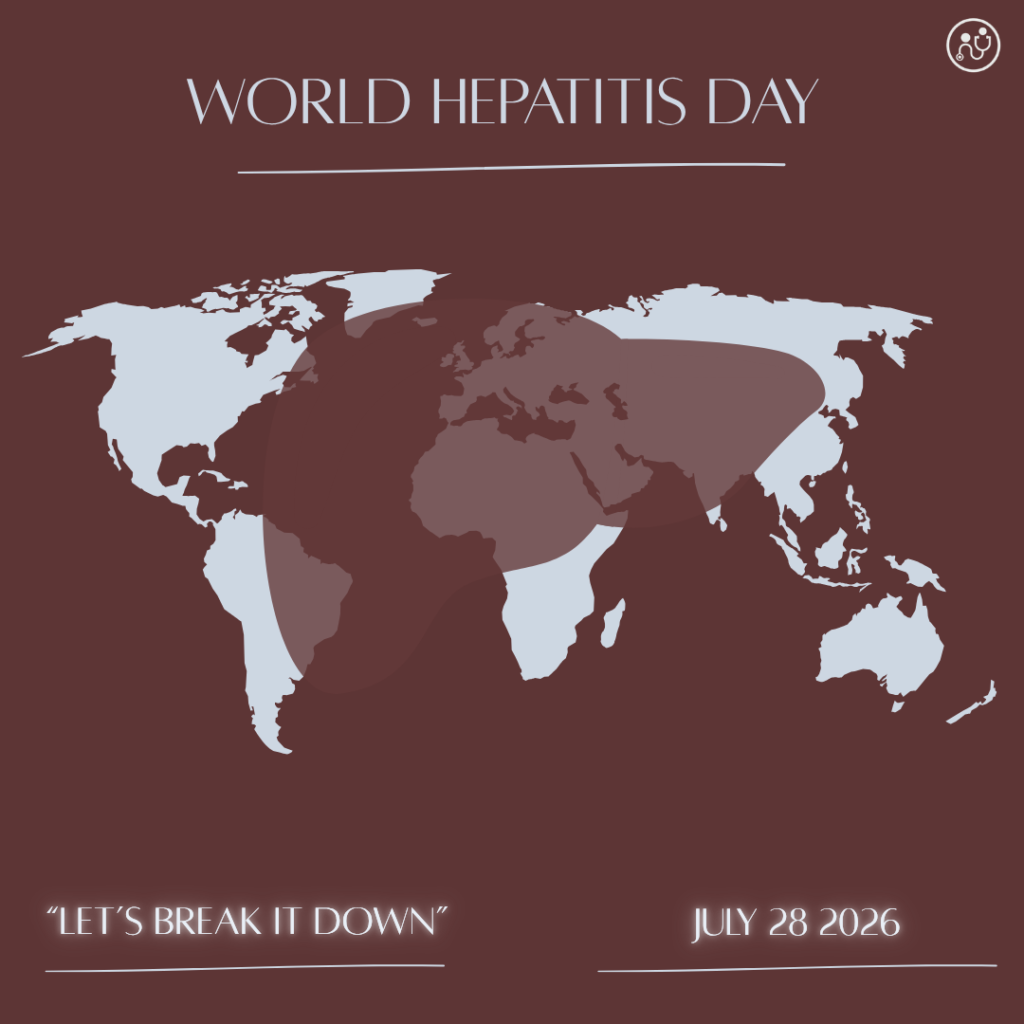
Every year on 28 July, the world comes together to observe World Hepatitis Day, a global campaign dedicated to raising awareness about viral hepatitis and its impact on millions of lives. This day encourages individuals, communities, and healthcare providers to work together to prevent new infections, promote testing, and ensure everyone has access to life-saving treatment.
Although viral hepatitis is preventable, treatable, and, in some cases, curable, many people remain undiagnosed. World Hepatitis Day 2026 is an opportunity to educate, reduce stigma, and remind everyone that early detection can save lives.
What Is Hepatitis?
Hepatitis is an inflammation of the liver, most commonly caused by a viral infection. There are five main types of viral hepatitis: Hepatitis A, B, C, D, and E. Each type differs in how it spreads, its severity, and the treatment available.
- Hepatitis A and E are usually spread through contaminated food or water.
- Hepatitis B, C, and D are transmitted through infected blood or bodily fluids, including unsafe injections, sharing needles, and unprotected sexual contact.
Without proper treatment, chronic hepatitis B and C can lead to liver cirrhosis, liver failure, and liver cancer.
Why It Matters
Millions of people around the world are living with hepatitis, yet many are unaware they have the infection because symptoms may not appear until significant liver damage has occurred. Delayed diagnosis can result in serious health complications that could have been prevented through early testing and treatment.
World Hepatitis Day reminds us that increasing awareness, expanding access to healthcare, and encouraging routine screening are essential steps toward eliminating viral hepatitis as a public health threat.
Common Symptoms
Many people with hepatitis experience no symptoms during the early stages. When symptoms do occur, they may include:
- Fatigue and weakness
- Yellowing of the skin and eyes (jaundice)
- Dark urine
- Pale-coloured stools
- Abdominal pain
- Loss of appetite
- Nausea and vomiting
- Fever and joint pain
Anyone experiencing these symptoms should seek medical evaluation as soon as possible.
Risk Factors
Several factors can increase the risk of hepatitis infection, including:
- Unprotected sexual activity
- Sharing needles or syringes
- Exposure to infected blood
- Receiving unsafe tattoos or piercings
- Poor sanitation and contaminated food or water
- Living with or being born to someone with hepatitis B
- Travelling to areas where hepatitis is more common
Knowing your risk can help you make informed decisions about testing and prevention.
Prevention and Action
The good news is that hepatitis is largely preventable:
- Get vaccinated against hepatitis A and B.
- Practice good hand hygiene and consume safe food and water.
- Avoid sharing needles or personal items that may contain blood.
- Practice safer sex.
- Get tested if you believe you may be at risk.
- Follow treatment plans if diagnosed with hepatitis.
Early diagnosis and treatment not only improve health outcomes but also help prevent the spread of infection.
This Year’s Message: Take Action for a Hepatitis-Free Future
World Hepatitis Day 2026 is a reminder that eliminating hepatitis requires action from everyone. Whether it’s getting tested, receiving a vaccination, supporting someone living with hepatitis, or sharing accurate information, every effort helps move us closer to a world free from viral hepatitis.
This World Hepatitis Day, take the time to learn your risk, know your status, and encourage others to do the same. Together, we can protect our communities, reduce stigma, and work towards a hepatitis-free future.